Plot summary and review
Mandali: plot summary and review
⚠️ Spoiler warning: this article discusses the story, including how it ends.
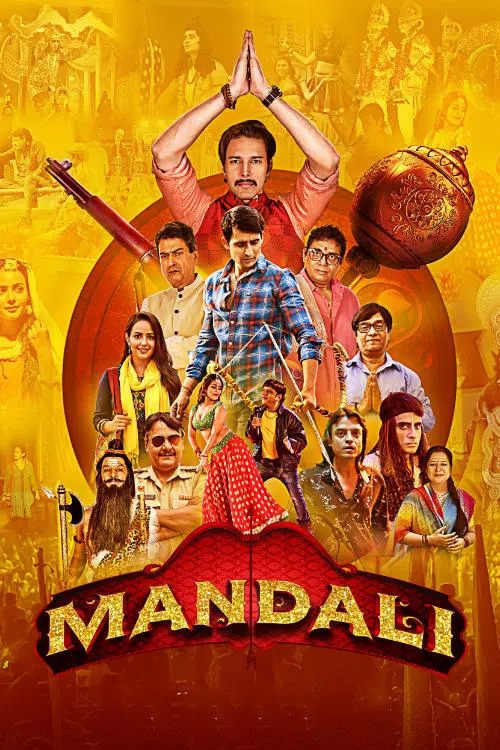
Mandali centres on a man who performs in a Ramlila troupe, the traditional stage retelling of the story of Rama. He belongs to a world of costumes, recitation and community gatherings, and he takes the values those performances celebrate seriously, not merely as a role he plays in the evening.
The trouble is that the world outside the stage is moving in another direction. Social values are wearing away, and the ideals he acts out every night look increasingly out of step with how people actually behave. The central conflict follows from this: he decides he cannot simply keep performing righteousness while ignoring its decline, and he starts to struggle in earnest to defend dharma and the cultural traditions he loves. The film sets the symbolic battle of the epic against a very present-day struggle, and the performer has to find out whether the lessons he has recited for years can hold up in real life.
Read the rest of the article
The synopsis does not give enough detail to say how every turn plays out, so it is fair to say only this much: the story is built around a person standing up for principle against a changing society, and it is framed as a fight, not a quiet lament. The outcome is meant to speak to whether tradition and moral conviction still have strength when pressure mounts.
As for what to expect, the drama and action genres suggest a serious, earnest tone with some physical confrontation alongside the emotional and moral questions. The themes are faith, duty, cultural preservation and the gap between ideals and everyday conduct. Viewers who enjoy stories rooted in Indian tradition and religious storytelling, and who do not mind a film with a clear message at its heart, are the most likely audience. Those looking for a light or purely escapist watch may find the subject matter heavier than they want, and anyone sceptical of films that wear their values openly may find the approach direct. For viewers who connect with its subject, it offers a sincere look at what it means to hold on to principles when the world around you is letting go of them.