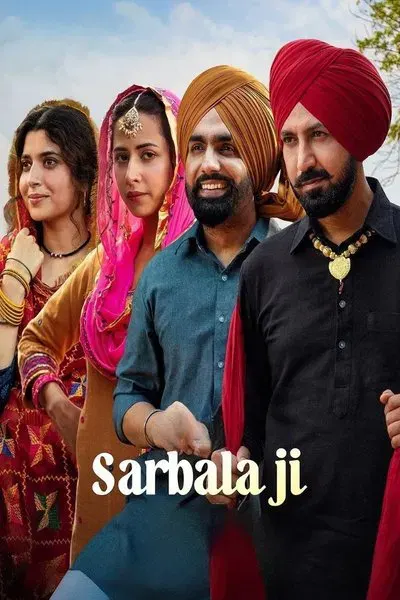
Plot summary and review
Sarbala Ji: plot summary and review
⚠️ Spoiler warning: this article discusses the story, including how it ends.
Sarbala Ji is set in Punjab before independence, and its story begins with a joke that goes badly wrong. A man who makes his living entertaining at weddings plays a prank, and the consequences land on his shy cousin, whose own wedding is about to happen. What should be a simple, joyful journey with the groom's party turns into something stranger when a curse enters the picture.
From there the central conflict is easy to follow. The entertainer's careless fun has set off a chain of trouble, and the wedding procession becomes the stage where it plays out. The groom, who is already nervous, is pulled into a run of absurd mishaps, and the people around him are dragged along with him. The synopsis points to comic chaos as the main engine of the story, so the path to the wedding matters as much as the wedding itself. As for how it ends, the information available only suggests that the journey is the heart of the film, so I will not claim to know exactly how the curse is resolved or what it costs anyone.
Read the rest of the article
As for what to expect, the film appears to mix humour with the drama and action tags attached to it. The tone looks light and mischievous at the surface, with a folk-tale flavour in the idea of a curse, while the period setting gives it a rooted, regional character. Themes that seem likely include family bonds between cousins, the price of a thoughtless prank, and the awkwardness of a reluctant groom in a very public ritual. The action label hints at some physical, high-energy episodes along the way rather than a quiet, slow story.
It is a single feature, so it should suit an evening when you want something playful with a cultural backdrop. Viewers who enjoy wedding comedies, Punjabi village settings and stories where a small joke snowballs into a big problem are the likeliest audience. Those looking for a grim or strictly realistic historical drama may find the tone too light for their taste.